
Engines, Oil, & Carbon Buildup
Let's get our hands dirty figuring out what is going on in these newer engines, why it's terrible for consumers, and the precautions people who want their depreciating assets to last should take.

The majority of drivers only know what type of gas should go into their cars, if that. If you're amongst the crowd that cares about the longevity of your car and maybe even change your own oil then this post is for you.
Oil Viscosity
Oil Ratings
Viscosity ratings for oil refer to the values written on the bottles of oil you buy from the parts store. Things like 0W-20, 5W-30, and 10W-40 are all oil viscosity ratings. It is a value defining the thickness (or flow) of the oil at different temperatures.
The first number indicates the oil's thickness at low temperatures while the second represents thickness at high temperatures. Simply put, the lower the viscosity the more free flowing and similar to water the oil is. The higher the viscosity the more it would resemble a honey-like flow.
Oil viscosities are determined by the size of the oil gallies and passages within a given engine and the general operating conditions of the engine coupled with the weight of the car and the maximum load the car is designed to withstand.
These conditions all factor into how the viscosity is determined and the higher the viscosity the less fuel-efficient, the lower the more fuel efficient. However, lower is not always better.
Carbon Buildup
Some of you are wondering, "Chris, how is it possible that better fuel economy is a bad thing? What's the big deal with thinner oil?"
Engines are sealed system. Multiple fluids such as oil, coolant, and gasoline are flowing through it in specific locations and the three should never be mixed. However, due to the lower viscosities and thinner consistencies, oil is now making its way past piston rings and into the combustion chamber of the engine.
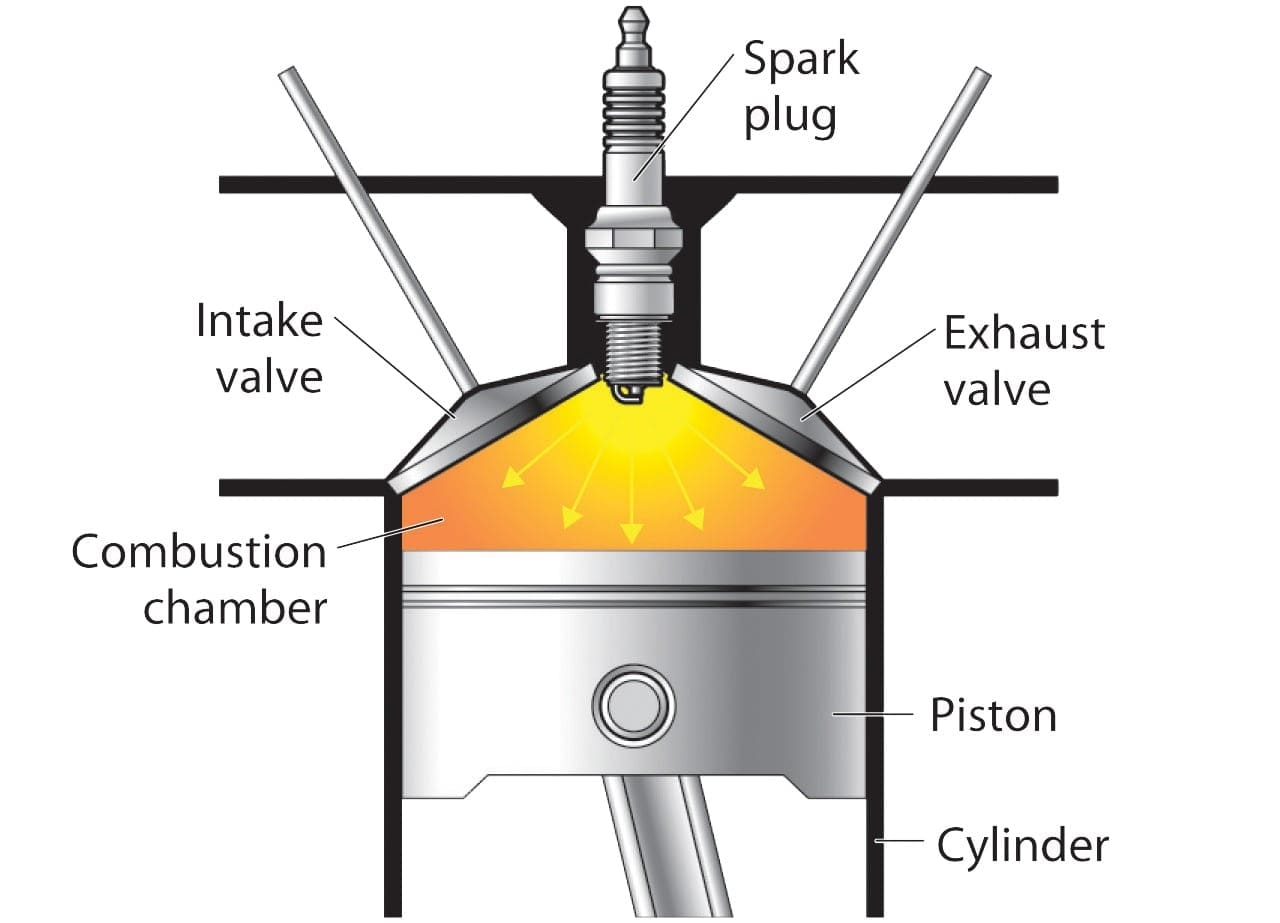
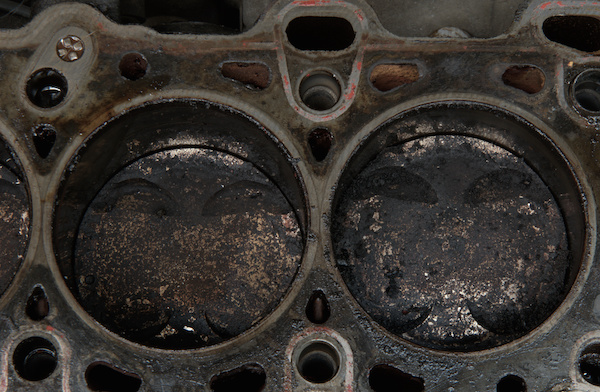
This diagram of the combustion chamber shows how a single cylinder looks and what operations go on within it. The pain point with the lower viscosities is that there is oil underneath the piston head (the wider portion of the piston) on the bottom half of the cylinder, now that the oil is so thin it makes its way past the cylinder wall and the piston head and into the combustion chamber where it burns up with the gasoline. This burnt oil is what carbon buildup comes from. The carbon buildup makes it's way all over the combustion chamber, intake manifold, and exhaust manifold. If left untreated this leads to decreased engine performance, lower fuel economy, failing piston rings, increased oil burning and ultimately engine failure. So much for the added 5MPG right?
Modern Engines
In order to keep up with EPA standards and regulations, car manufacturers have pulled every stop possible to improve the fuel economy of their vehicles at the expense of the consumer and not with better engineering. Rather than creating a more efficient engine design or doing more material engineering to revamp components in an engine, car engineers took the easy route of cheaping-out on the vehicle.
Ignoring all future side-effects of their engineering, they implement these solutions at no additional cost to themselves, maybe even saving themselves money, and the consumer fronts the bill within a few years of ownership.
Manufacturers continue to lower oil viscosities, make body panels lighter and weaker, using CVT transmissions, and throwing in turbos into every engine they can to give the illusion of a strong reliable engine. These practices result in extremely unreliable cars prone to frequent trips to the mechanic and leaves you vulnerable to the common line from your Uncle Johnny saying "They don't make em' like they used to!". So how do you protect yourself from your berating Uncle Johnny? We'll get into that later.
Preventative Maintenance
Despite the growing list of negatives associated to newer cars, there are ways to treat and maintain your vehicle to combat carbon buildup.
The first solution that will fix most of your problems is do NOT buy a new car. Cars actually were made better in the past and had the consumer's best interest in mind, as opposed to now throwing in a touch screen and a turbo makes it a luxury/performance car.
If you have already bought a new car and are stuck (like my 2023 Subaru Crosstrek using 0W-20 oil), then the steps below will help you drastically mitigate the negative effects of lower viscosity oil.
Oil Change Intervals
Most manufacturers recommend an oil change every 6,000 miles (~ 10,000km) or every 6 months, whichever comes first. However, depending on the application of the vehicle oil changes should be much more frequent. Certain conditions such as city driving, pulling a trailer, increased weight, driving up steep inclines, or even driving in hotter climates all contribute to increased oil wear and reduce the protection offered by the oil while also breaking it down from its original composition. Carbon buildup also ends up in the oil so changing it frequently is a good way to prevent carbon from increasing in your engine. I personally change the oil on my vehicle every 3,000 miles however this is on the "too frequent" side of things, but I prefer changing my oil in my parking lot as opposed to changing my engine at the dealership.
Gasoline Types and Locations
Gas is the frontline attacker to carbon buildup. Gasoline gets into the combustion chamber and passes throughout your fuel system and using a high quality gas with plenty of additives and detergents can help decrease your carbon buildup in your engine. You will want to check for gas stations that have a Top Tier label associated with them such as Chevron, Shell, Exxon, Mobil, Phillips 66, 76, Conoco, Sunoco, and Costco. Top Tier gas stations gain their title due to fueling their customers with additional detergents that improve engine cleaning.
You can find a full list of Top Tier gas stations and information about how it protects, improves performance, and restores components with carbon buildup on the Top Tier website.
The second part to this is using a higher grade gasoline. Even though a car may require only regular 87 octane gas, using 93 octane can benefit you because higher octane gases hold more detergents and cleaning additives than lower octane gas options.
Engine Cleaning
Dealerships and some mechanic shops will recommend an engine cleaning service for your car. This is a good service to have done however you do not need to do it at the intervals recommended assuming you have been changing your oil frequently and on time and you use top tier gas. A full engine cleaning done either by yourself or a mechanic involves intake, fuel system, and top-engine cleaning of carbon buildup. This is a several step process that I will go into more depth on in another article explaining how to do it. This can safely be done every 30,000 to 50,000 miles. Any earlier won't harm your car but they are expensive, the last Subaru dealership I went to quoted me $350 for this service.
PCV Valves
Positive Crankcase Ventilation valves are fantastic inventions that help combat unsafe gases and pressures in the combustion chamber while reducing the amount of carbon buildup formed in the engine. It regulates the amount of air that flows into the crankcase and vents it out of the top end when it is too much air. This vent also pushes out oil vapors that would normally burn up and cause sludge in the engine.
These valves are cheap and should be serviced. I would recommend checking your manufacturers instructions on how often this should be serviced but considering how easy they generally are to change and how cheap they can be (~ $20 USD) it is a great maintenance item to tackle frequently on these newer vehicles.
Shutting the Hood
Carbon buildup has always been around but it has exponentially increased with the recent reductions in oil viscosity in newer engines. While it is a strong damaging force it can be mitigated and managed through frequent oil changes, good gas, and servicing.
References
- Engine Learner - Understanding Oil Viscosity Ratings: A Comprehensive Guide
- Top Tier